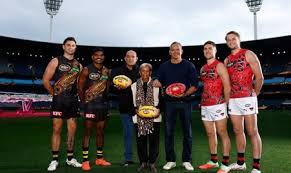
Soft‑tissue injuries aren’t just creeping into the AFL season; they are overwhelming it. Every week between March and September, the Australian Football League (AFL) injury lists read like a copy‑and‑paste job of hamstring strains, calf tears and groin issues, leaving clubs scrambling for fit players. Richmond is looking to top up its playing list this week for Indigenous Round with players from lower leagues to field a team.
The AFL’s insistence that this is “bad luck” is starting to look ridiculous. The pattern is too widespread, too predictable, and too deeply tied to the way the modern game is built. It is not a coincidence.
In AFL and other full-contact sports like Rugby League, there is, especially in recent years, a growing awareness of the dangers posed by head knocks to players. The long-term impacts on the brain from concussion are becoming better understood, and new rules require players to be removed from the field for a Head Injury Assessment (HIA) when they receive a head knock.
The AFL is spending significant time and resources to address concussions and is prepared to make changes to the rules of the game to reduce head knocks. That is all very positive, but there is another injury problem causing disruption, about which the AFL seems far less interested, and that is the spate of soft-tissue injuries.
The modern game is quicker and involves more “two-way” running than ever before. According to the AFL website (afl.com.au), most players run upwards of 15km in a game. That’s 15 km of high-intensity running whilst absorbing bumps and knocks. That combination of full-contact and high-intensity running makes the AFL arguably the most physically demanding professional sport in the world.
Defensive systems demand constant sprinting. Transition footy is relentless. Yet list sizes remain tight, rotations (the number of substitutions allowed per game) are capped, and pre‑seasons have been trimmed. The recovery gap between games varies across the partially known fixture, with gaps as short as five days in some cases, leaving little time to recover. I reckon the AFL wants a Formula 1 product but expects players to operate with lawnmower‑level maintenance.
To understand the real cause, I spoke with Mark Delaney, a veteran strength and conditioning coach who has worked across the SANFL and WAFL, and with AFL‑listed players during the off‑season. He has no club ties, which means he can speak honestly, and he reckons, “Soft‑tissue injuries don’t just appear out of nowhere… the types of injuries we are seeing more of, muscle strains to hamstrings, calf and quadricep muscles, are almost always the result of accumulated load. The AFL has created a game where players are hitting top speed more often than ever, but they’re not getting the recovery windows they need.”
Delaney says the league’s push for constant speed and fewer stoppages, quicker ball movement and more open play has created an environment where breakdowns are inevitable. “You can’t keep increasing intensity without increasing support structures. Something has to give, and right now it’s hamstrings, calves and groins.”
Fans feel the impact too. When a Brownlow Medal (best and fairest player of the year) favourite or marquee forward goes down mid-season, it doesn’t just hurt their club – it hurts the competition.
The AFL markets itself on star power, yet its rules and scheduling are burning those stars out. What’s most frustrating is the league’s reluctance to adapt. Instead of reviewing rotation caps or expanding lists, the AFL seems content to let clubs patch players together week‑to‑week. But players aren’t machines. They’re elite athletes whose careers can be derailed by a single mismanaged strain.
Delaney believes the solutions are obvious. “Give clubs more flexibility. More rotations. Slightly bigger lists. A longer pre‑season. If the AFL wants a high‑speed product, it needs to invest in the bodies producing it.” He’s right. Soft‑tissue injuries aren’t random; they’re a warning sign that the system is stretched too thin. The league can’t keep selling the fastest game in the world while ignoring the physical toll that speed demands.
In the end, the AFL must decide whether to keep clinging to a past that no longer exists or finally acknowledge that today’s game has outgrown yesterday’s systems. If it refuses to confront the demands of the modern era, the injury crisis won’t pass — it will calcify into the new normal, draining the players, the supporters, and ultimately the integrity of the competition itself.
Darcy McEncroe is an emerging Melbourne‑based sports journalist with a focus on the AFL and the evolving demands of the modern game.
 Darcy McEncroe Journalism Portfolio
Leave a comment